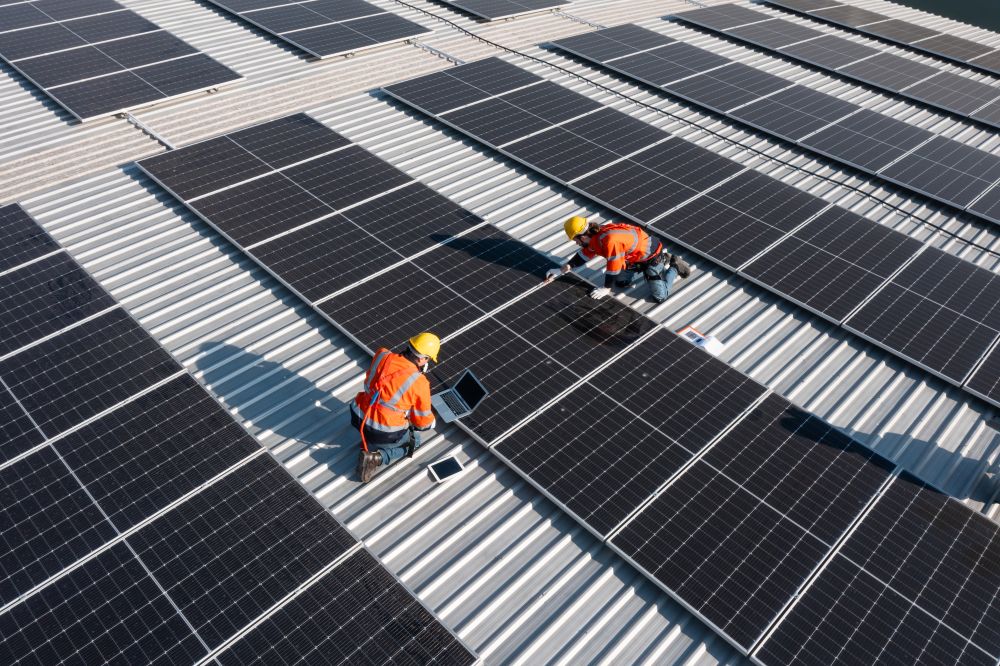
Feature image: Harnessing the power of solar to enhance the electric grid. Image source: Arizona State University
Rumours that the current heatwaves are breaking the UK electricity grid are probably overblown, but the changing structure of the grid is increasingly affecting households and businesses alike. The current pressure on the grid comes from a combination of peak demand in the evening, just as solar output drops sharply, and low wind during the anticyclonic conditions that tend to accompany heatwaves.
What do changing grid patterns mean for households and businesses?
For years the golden rule of cheap UK electricity was simple: shift usage to overnight, when demand was low, and gas, coal, and nuclear power stations were pumping out steady supply. That rule is fraying, and several stories from the past few weeks point toward where the grid is heading — including a growing role for community energy.
Overnight tariffs — Economy 7, for those old enough to remember the 1970s and 80s — gave households seven hours of cheaper electricity overnight. More recently, the fact that wind kept blowing at night made a similar approach popular for EV charging, but that was largely a winter, wind-driven phenomenon.
So why is Octopus Energy retiring its Greener Nights tariff? The change is being driven by shifting energy costs through the day — the cheapest power increasingly turns up in the middle of the day rather than overnight, driven by solar in the summer. Octopus’s cheaper electricity replacement rewards flexible, whenever-you’re-home charging instead of a fixed off-peak window: a tacit admission that it’s no longer as simple as “cheap equals night”.
Flexibility is now the name of the game.
Another example is Myenergi’s Gridpay service, which pays EV owners a small monthly reward for letting their charger respond to real grid conditions rather than a fixed clock. It’s another sign that “always charge at 1am” is being replaced by “charge whenever the grid actually needs you to.”
Why is this happening?
The structural shift is being driven by the rollout of Market-wide Half-Hourly Settlement (MHHS) across the UK market through 2026, which gives all suppliers accurate half-hourly consumption data rather than estimates. That’s the enabling infrastructure for more suppliers to launch genuinely dynamic, demand-based tariffs at scale — an area likely to move quickly over the next year or two.
Australia shows where this trend leads. Grid-scale batteries there are now soaking up midday solar and discharging it into the evening peak so effectively that, as energy transition advisor Gavin Mooney has highlighted on LinkedIn (see Gavin’s figure below), batteries were setting the wholesale price nearly 40% of the time during the evening peak by late 2025, up from under 5% a year earlier — squeezing out gas and flattening the daily peak.
What used to be a predictable evening price spike barely registers anymore. The UK doesn’t have Australia’s battery fleet yet, but the direction of travel is clear.
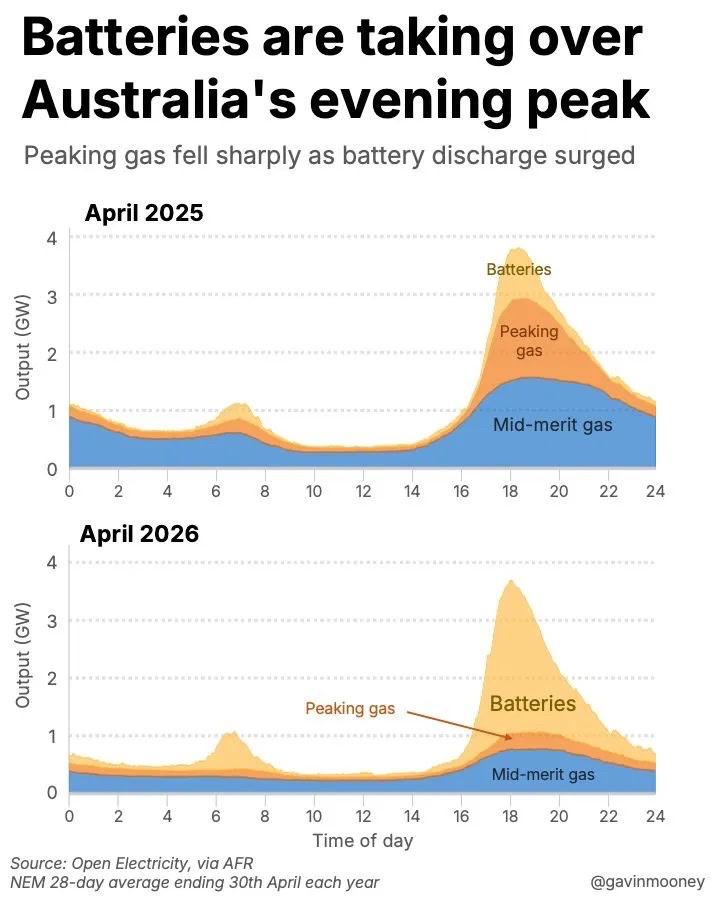
Put together, these stories point the same way: solar has made midday electricity much cheaper, batteries are starting to make evenings cheaper too, but wind and solar droughts can still catch a renewables-heavy grid out.
Households, commercial users, and community energy projects alike need to keep costs down and smooth out the price spikes that inevitably get passed on to them. But not everyone can, or wants to put solar panels on their own roof and add a battery.
Is Community Energy the answer?
Community Energy won’t solve the UK grid’s problem on its own, but it attacks it at a scale national policy often can’t reach: the street, the school roof, the local business park. Community Energy benefits those who can’t or don’t want to buy their own solar, battery and EV charger.
-
A buffer against price spikes.
When the whole country is drawing from the same stressed grid, wholesale prices spike for everyone. A local scheme with its own generation and battery storage is still connected to that grid, but it's less at its mercy — it can supply local demand from its own assets during the very hours the wider market is most expensive.
-
Turning small flexibility into real leverage.
One household has no bargaining power with the grid operator although if they own solar, EV charging and battery storage, they can take advantage of lower prices at different times of day. A community energy organisation like Milton Keynes Community Energy can coordinate many solar roof arrays, batteries, and chargers to aggregate that flexibility into something the grid actually notices — participating in demand-response schemes and lowering prices for those without their own solar panels or batteries. Our ambition, as we build MK Community Energy, is to support the shift that is reshaping Australia, where renewable energy sources combined with batteries increasingly smooth and set prices.
-
Community energy: Keeping the value local.
Under the standard grid model, an organisation or household exports cheap solar in the day and buys back expensive evening power, with the margin captured elsewhere. Community models — like the roof-lease and power purchase agreement structure MK Community Energy offers through our ”Community Solar for Organisations” and “Solar for MK Schools” programmes — allows a local community energy group to own the asset. As a result, the community gets lower electricity prices, and the profit is reinvested into more community solar, storage, and direct support for people struggling with bills.
-
Community Power Clubs: making the local market real.
The missing piece in most community solar schemes has always been the same one: a school or community building generates cheap power at midday, but if nobody's there to use it — weekends, holidays, empty offices — that power gets sold off cheaply and electricity used later by the school or community has to be paid for at a premium price. Community Power Clubs close that gap using Licence Exempt Supply. Community generated electricity that is exported can be matched to nearby households and businesses via an intermediary like Younity, giving them discounted electricity as it’s generated, rather than exporting it to the grid at a low rate and watching someone else capture the value.
None of this replaces the need for grid-scale investment — no number of community schemes will single-handedly fix a multi-day national wind or solar drought. But Community Energy could be a structural answer to the summer juggling of cheap midday and expensive evening power, and be a genuine buffer against volatility. Community energy is one of the few tools that works at exactly the scale where the problem starts: locally.