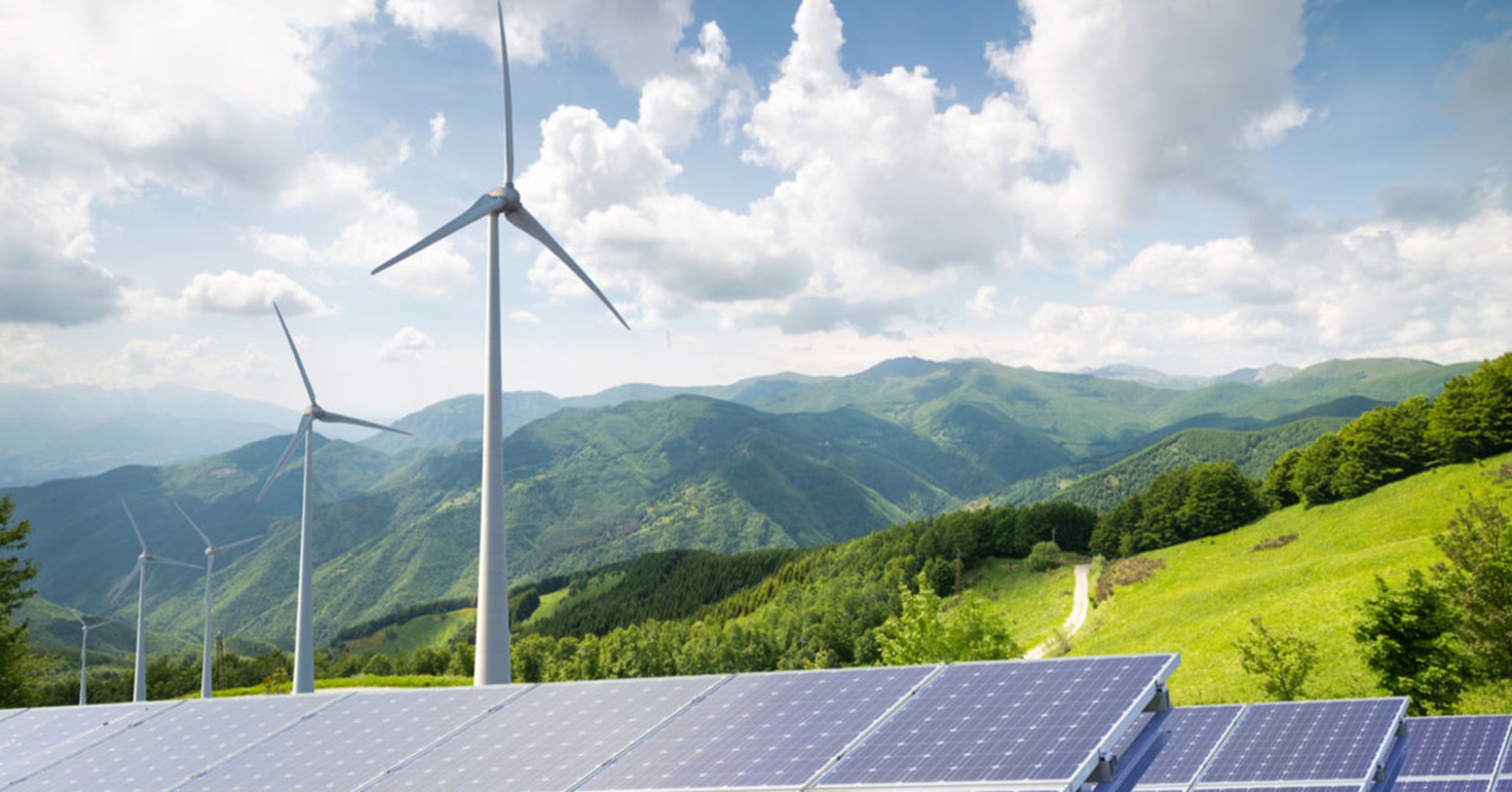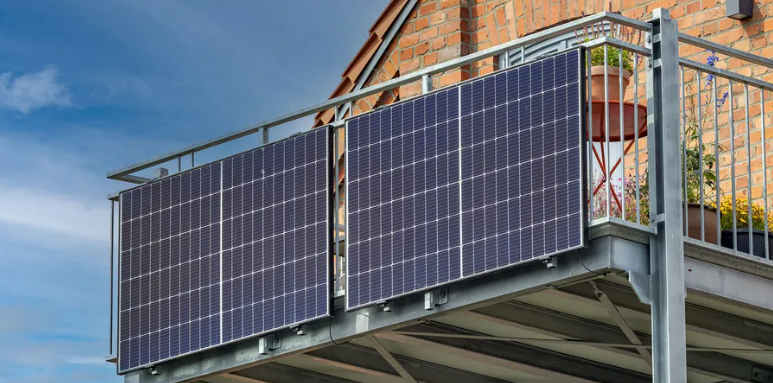
Feature image: Balcony solar. Source: Which? – Plug-in solar panels: everything you need to know
On 27 August 2026, plug-in solar became legal to buy and self-install in Great Britain for the first time, under regulatory changes to the Plugs and Sockets etc. (Safety) Regulations 1994 and the Electricity Safety, Quality and Continuity Regulations 2002. For the first time, households without a suitable roof, or without the capital for a full installation, have a legitimate route into generating their own electricity.
It’s a genuinely significant change for homeowners who want solar but don’t have the roof space, and one MK Community Energy has been tracking closely. But it’s worth being precise about what it does, and doesn’t, change.
What is plug-in solar and what can’t it do?
Plug-in solar kits are capped at 800W of inverter output, with up to 2,000W of panel capacity permitted behind it. (Please note: If you have more than 960W of solar in your pack, you should have your electrical connections checked.) They must be sold as a complete, factory-plugged unit and appear on the Energy Networks Association’s Type Test Register before they can legally be self-installed. As Which? notes in its coverage of the announcement, these systems are aimed squarely at households where a full rooftop array isn’t practical, such as flats, rented terraces, and properties without south-facing roof space.
That’s a meaningful addition to the energy landscape. It is not, however, a substitute for the larger-scale, professionally installed solar generation that delivers the bulk of a community’s decarbonisation and bill-reduction potential — nor does it come with Smart Export Guarantee payments, since plug-in systems sit outside the export schemes entirely.
Where this fits with our work
Our focus remains on supporting larger-scale community-owned solar installation projects for organisations across Milton Keynes that benefit the host and the local community. Plug-in solar doesn’t change our focus, but it does change the conversation we’re having with MK residents through our Home Energy MK programme. We’ve seen a good appetite for information on plug-in or “balcony” solar from homeowners who until now haven’t been able to entertain the idea of solar power at home. We’d like to thank Matt Hinton (from Depth of Light) for volunteering with our team to help clear up common misconceptions and empower residents with the knowledge they need to make more informed decisions. His introduction to plug-in solar at a recent Transition Town MK (TTMK) social evening proved hugely popular. Matt stayed true to the Home Energy MK principles and didn’t pitch for business, instead he took an evidence-based approached to his advice, covering aspects such as the legal requirements, fuse board checks, and the approved-products list, that are not typically in such appraisals of this new DIY home energy generation.
Whilst more people have a solar option now, community-scale schemes remain the more effective route to serious savings and grid impact. This connects directly to work getting underway locally that Caroline Saunders, chair of MK Climate Action Network, introduced at the same TTMK meeting. Her presentation detailed an early-stage idea for a Power Station-style, resident-led movement (see power.film) to bring solar to homes across Great Linford, Blakelands and Giffard Park through a neighbour-led initiative. This is exactly the kind of collective model community energy groups like us exist to support, and we look forward to continuing to collaborate with the group as they embark on their project.
Watch this space for more developments!